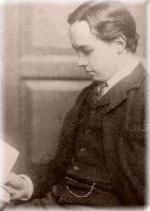
St. Patrick’s Day, 1858: a bloody day in the history of Toronto. Thomas D'Arcy McGee has come to town. He was once was an Irish revolutionary, but now he's one of Canada's leading politicians. He will go on to become a Father of Confederation and Sir John A. Macdonald's right-hand man. And thanks to his transformation from Irish freedom fighter to a loyal British subject, he's also a deeply controversial figure: on the fault line between Protestants and Irish-Catholics.
McGee has come to Toronto to attend a banquet and give a speech. On the surface, it doesn't seem like a particularly divisive itinerary. But this is a deeply Irish city. More than a third of its residents were born in Ireland — a higher percentage than any other North American city, even Boston or New York. McGee's mere presence is enough to help plunge the city into violence — the riot that is about to rock King Street is just one example of the sectarian battles that will earn Toronto the nickname, "The Belfast of North America".
Many of Toronto's Irish residents are relative newcomers, having arrived just a decade before McGee's fateful speech. During the summer of 1847, nearly 40,000 Irish refugees flooded into Toronto — twice the population of the entire city. They were driven out of Ireland by the Great Famine along with forced evictions by landlords who seized the opportunity to run them off their land.
The vast majority of the new arrivals were Catholic… and they didn’t exactly find themselves welcomed into the city with open arms. Seventy-five percent of Toronto residents were Protestants; many of them were members of the Orange Order, a deeply anti-Catholic organization founded in Northern Ireland during the late 1700s. Orangemen are still a major presence in Belfast to this day; even in the 21st century, their annual parades frequently descend into riots.
The Orange Order basically ran Toronto, keeping a stranglehold on municipal politics for a century. From the 1860s to the 1950s, nearly every Mayor of Toronto was a member of the Order. City councillors, too. And police. And firefighters. Just about all city employees. At the time that all those famine refugees were pouring into the city, there wasn’t a single Catholic who held municipal office in Toronto. For many decades to come, well into the 1900s, Catholics had trouble getting hired for any public job in the city.
Discrimination against Irish-Catholics became a defining feature of life in Toronto. “Irish beggars are to be met everywhere,” the Globe newspaper wrote, “and they are as ignorant and vicious as they are poor. They are lazy, improvident, and unthankful; they fill our poorhouses and our prisons and are as brutish in their superstition as Hindoos." By 1864, the city’s Catholic bishop was actively discouraging Irish-Catholics from moving to Toronto, warning them off because of the Protestant domination of the city and the terrible discrimination Catholics faced there.
And it wasn’t just Toronto. Orange Lodges spread across Canada from Newfoundland to Vancouver Island. At one point, there were more Orange Lodges in Canada than there were in Northern Ireland itself. At the time of Confederation, a third of all Protestant men in Canada were current or former members of the Orange Order — including Sir John A. Macdonald. Three future prime ministers would be, too; one of them, Sir Mackenzie Bowell, had been the Grandmaster of the Canadian lodge. It was said that any time they were in power, the federal Conservatives always reserved three seats in Cabinet for Orange MPs.
But no city in Canada was more Orange than Toronto. And some of the local Orangemen were willing to kill and be killed in order to maintain their grip on power.
In Toronto, just like in Belfast, the riots frequently started with a parade. Every year on the 12th of July, the Orange Order would hold a big march to commemorate the victory of the Protestant King William of Orange over Catholics in Ireland in the 1600s. “The Twelfth” was practically an official holiday in Toronto: municipal employees even got the day off so they could attend — with pay. At its height, thousands of Torontonians marched in the annual parade while tens of thousands cheered them on.
Catholics would generally stay indoors that day, and keep their children close. But not all of them. The parades would occasionally erupt into violence between Orangemen and Irish-Catholics, the battles of Belfast being fought in Canadian streets. And it wasn’t just on the Twelfth. Protestant-Catholic riots became an almost annual occurrence: after political meetings and elections, on Guy Fawkes Day, when the Prince of Wales visited... religious processions attacked, St. Michael’s Cathedral under siege, the bishop pelted with stones... Once, the Orange Order even once attacked a circus: the clowns cut in front of some Orange Order firefighters waiting in line outside a brothel.
When an Irish revolutionary came to town to deliver a lecture, Orangemen rioted for two days, smashed the windows of St. Patrick's Hall, destroyed a tavern, and trashed stores on Queen Street.
When Catholics celebrated the Papal Jubilee, stones rained down from above. Shots were fired. Thousands battled in the streets. By the time it was over, a Catholic stable hand lay dead.
That was from the only time a life was lost to the violence between Toronto's Protestants and Irish Catholics. And one of those lives would be lost on St. Patrick's Day, 1858: the day Thomas D'Arcy McGee gave his speech in Toronto. With the controversial politician in town, tensions were high. It was no surprise when the annual St. Patrick's Day parade descended into violence. An Orangemen drove a horse and cart into the procession, trying to disrupt it. Catholics fought back, chasing him into a nearby alley where a violence struggle ended with an Irish-Catholic man murdered: stabbed to death.
The incident would lead Toronto's Irish-Catholics to create a new organization that would eventually evolve into the Fenian Brotherhood: a revolutionary group dedicated to the cause of Irish independence from Britain. A decade later, American Fenians would march across the border to launch an invasion of Canada in the hope that it would help put pressure on the British to leave Ireland. The attack was doomed to fail, but dozens died and even more were wounded. Toronto's very first war memorial was dedicated to the memory of the students from the University of Toronto who died fighting against those Fenian invaders.
By then, even Thomas D'Arcy McGee himself was dead. The Father of Confederation was gunned down in the streets of Ottawa in 1868, assassinated as he returned home from a late night session of parliament. A man suspected of being a Fenian agent, Patrick Whelan, was hanged for the murder (though even today, it's unclear whether he was the real murderer).
Before long, the situation had gotten so out of hand that Toronto decided to take drastic action: beginning in the 1870s, the city's St. Patrick's Day Parade was banned. And it would remain that way for more than 100 years. It wasn’t until the 1950s that the Orange stranglehold on Toronto was broken. After the Second World War, Toronto was becoming more and more multicultural. For the first time in 118 years the city elected a mayor who wasn’t Protestant: the Jewish Nathan Phillips. And the tensions between Protestants and Catholics began to fade away.
And so in the 1980s, Toronto decided it was finally safe enough for another St. Patrick’s Day Parade. The sectarian violence that had once rocked the city on a regular basis was now nothing more than a distant memory of a long-ago time. Today, St. Patrick's Day is a cherished tradition in Toronto, just as it in so many other cities across Canada and the rest of the world. As the streets fill with people wearing their shamrock hats and bars sell gallons of green beer, it feels as if the whole city celebrates the holiday — without a hint of the violence that once spilled blood in its streets.
---
Want to know more about the assassination of Thomas D'Arcy McGee and the mystery of who shot him? We reopen the country's most notorious cold case in a recent episode of Canadiana — the Canadian history web series I host:
I wrote more about the summer the Irish Famine refugees arrived in Toronto and the power of the Orange Order in The Toronto Book of the Dead, which you can find at the favourite local Toronto bookstore or order from Amazon or Indigo.
Image: The Jubillee Riots of 1876 via Wikimedia Commons.
Wow. Well, here you go hipsters, this is what it looked liked right outside the Gladstone Hotel in 1893. The Gladstone (which isn't in this photo, just out of sight to the right) would have only been four years old when this was taken. But the awkward "Dufferin jog" was already in place -- created by the railroad running by over the bridge in this photo. The bridge only had an underpass built on Queen, not Dufferin, meaning traffic traveling up and down Dufferin had to take a detour up Gladstone Avenue instead. It would take more than 100 years for a second underpass to be built; it just opened back in 2010.
Maybe even more interesting than that, though, is that in 1893 Toronto was in the middle of switching for horse-drawn streetcars to an electric system. According to the Wikipedia, the very first electric streetcar had started running just the year before; the final horse-drawn streetcar would be retired the year after. This photo captures that brief transition. The guy in the foreground is laying down Queen Street's first streetcar tracks, with the soon-to-be-obsolete horse-drawn transportation behind him.
I came across this photo in a TTC gallery put together by the Toronto Star, which you can check out here. I'll probably post another couple of photos from it over the next few weeks.
This, according to me, has to be one of the most beautifully pastoral photos ever taken of Toronto. It shows us what it looked like in 1889 at the very south-east corner of Etobicoke, in the spot where Mimico Creek meets Bonar Creek just before they empty into the lake. (Well, where they used to meet anyway; most of Bonar Creek was buried in the 1950s.)
It's just a few block west of the mouth of the Humber, and these days it's easily recognizable thanks to the gleaming white arch of the Mimico Creek Bridge (which purposefully looks like a smaller version of the bridge over the Humber).
Amazingly, even though it looks like these Victorian Torontonians are in the middle of the countryside, not far to the east of them our city was undergoing a crazily enormous boom, quickly becoming a full-blown metropolis. Between 1861 and 1901 the population quadrupled from about 60,000 to about 240,000 people.
I came across this photo in the veryvery good book I'm reading at the moment: HTO: Toronto's Water from Lake Iroquois to Lost River to Low-flow Toilets. So you can probably expect a bunch of water-related posts over the next little while. You can also buy the book for yourself from Coach House here or borrow it from the library here.
It all started back in the mid-1800s, as a relatively small provincial fair. They held it in a field out behind Upper Canada College, which in those days was on King Street (on the northwest corner of Simcoe, across from where Roy Thompson Hall is now). It was a very agricultural affair. They had cows and sheep and horses and blankets and knitting and needlework. The cheese was very popular. So was the wax fruit. The day ended with a big dinner at the Lieutenant Governor's residence across the street. The city's bigwigs were all there; they declared it a success.
For the next few decades, the fair toured around the province, moving from one city to another each year. Mostly, it came here and to Kingston and London and Hamilton. And as it grew, we started putting up permanent buildings for it. A Crystal Palace was the first to go up. And we set aside some land for it, too, part of the old Garrison military reserve that the government had held on to ever since our city was founded. A century and a half later, the Ex is still held on that same ground.
It wasn't until 1879, though, that we decided to have the fair here every year. And that we'd call it the Canadian National Exhibition. The CNE was officially born. By then, the fair was a huge freaking deal. There were 23 permanent buildings on the site. Thousands of exhibits. It drew more than 100,000 visitors that first year.
Now, no one, it seems, is quite sure exactly when the CNE's first ride opened. It might have been that year, or, at the very least, soon after. It was a tiny little Ferris Wheel. Just 15 feet high. It had four buckets; they could hold two people each. And the whole thing had to be powered by hand. It was such an early prototype that people didn't even call them Ferris Wheels yet. That didn't happen until about a year after this photo was taken, when George Ferris Jr. unveiled his enormous creation at the Chicago World's Fair. Tens of thousands of pounds of iron and steel. Enough room for more than two thousand people. All powered by steam engines. The world of amusement park rides had changed forever. And the Ex didn't waste any time following suit. The very next year, our fair boasted "Ferris Wheels, Carousals, Swings and other amusements for young and old." Soon, there would be an entire midway.
I suppose at some point I'll write up a short history of Rosedale, but for now I give you this photo from that neighbourhood's Wikipedia page. (Don't get too exited; those dudes aren't ghosts, they just moved during a long exposure.) That's the Glen Road Bridge, an earlier incarnation of the one that's still there today. These days it's a footbridge, stretching from the gorgeous old money mansions of Rosedale across the tree-lined valley below—over Rosedale Valley Drive—before linking up with a dirty concrete tunnel. The graffiti-lined tunnel passes under the roar of Bloor Street, by the dingy back entrance to Sherbourne Station, and into St. James Town, one of the most densely populated neighbourhoods in Canada and one of the poorest in the city, where abandoned Victorian homes, built just before this photo was taken, have been left to decay on South Glen Road, in what the Heritage Toronto website calls, during one of their more melodramatic moments, "a pit of despair".
Today, there's also an historical plaque on the north end of the bridge. (That would be the non-despairing end.) It has to be one of the most sweetly heartbreaking historical plaques in the city, about the author Morley Callaghan. He used to be friends with Hemingway back when they both lived here and then were sent to Paris as correspondents for the Star. (I wrote about their famous boxing match in my first full post.) Well, a while after his days hanging out on the Left Bank with the Lost Generation, Callaghan moved back to Toronto with his wife and eventually settled down in Rosedale, on Dale Avenue, not far from the bridge. The last line of the plaque: "Neighbours often saw and talked to him as he crossed this bridge with his wife and dog, Nikki, then with his dog, then alone until he died in 1990."
That's the Broadview streetcar, at Broadview and Danforth, in 1896. I found the photo through Google, but as it turns out, Torontoist posted it with an article about Victorian transit riders and drivers bitching about each other. My favourite complaint: "Ladies who wish to attract the attention of the conductor are not expected to punch him in the ribs with their umbrellas." The piece is from their kickass "Historicist" series, which gets published every Saturday. And you can read it here.
Robbie Ross was born into one of the most powerful families in Toronto. His father was a lawyer, a senator and, for a while, the President of the Grand Trunk Railroad. His mother was the daughter of Robert Baldwin, one of the most important figures in the history of our entire country — champion of Responsible Government and Canadian democracy. But Ross didn't get to live in Canada very long. Before he was two years old, his father had died and the family had moved to England.
There, Robbie Ross would soon become one of Britain's most scandalous and controversial figures. He was gay and he didn't hide it, a fact that didn't go over very well in Victorian England, where they were busy passing bigoted laws against such things. The harassment started early — he was bullied in school — and would continue throughout his life: he would be threatened with jail time, dragged into court, demonized in the press and eventually forced to leave the country altogether. During the First World War, an MP even wrote a pair of articles — one of them called "The Cult of the Clitoris," if you can believe it — accusing Ross of being part of a conspiracy of 47,000 treacherous "perverts" helping the Germans to "exterminat[e] the manhood of Britain" by turning Britons gay.
It didn't help, of course, that Ross happened to be sleeping with the most famous gay man in the entire British Empire.
Or the most famous bisexual man, anyway. Oscar Wilde was a husband and a father when when he first met the 17 year-old Ross. And it seems that up to that point, the writer really had been attracted to his wife. But she was pregnant with their second child in 1886, and as she underwent the whole growing-another-person-inside-your-own-person thing, Wilde got seriously turned off. Disgusted even. And there was the young, attractive Ross, "determined to seduce Wilde" according to at least one biographer and already experienced from his time in boarding school. The two hooked up. Ross moved in. And the pair would remain close for the rest of their lives.
The Canadian stood by Wilde even when things started to go sour. And they did so pretty quickly once the author began an affair with Lord Alfred Douglas. Douglas led Wilde into the seedy Victorian underground of gay prostitutes and brothels. And it was Douglas' screwed up relationship with his crazyass homophobic bully of a father (the oh-so-ironically-titled Marquess of Queensbury), which eventually landed Wilde in jail. When Queensbury left Wilde a poorly-spelled calling card denouncing him as a "somdomite," Wilde sued Queensbury for libel. But when it turned out there was plenty of evidence against him, he was forced to drop the case. In the aftermath, Ross begged Wilde to flee, but the author ignored him, was arrested, tried and eventually convicted of sodomy and gross indecency.
When Wilde got out after two long, miserable years in prison, Ross was waiting for him with a house in France. And though Wilde would forgive Douglas for his role and see him on and off over the next few years, it was Ross who was with him when he died. And it was Ross who took care of his affairs after his death, securing his legacy by buying back the rights to his works — which the author had been forced to sell during his trial — and stamping out the fake porn which was being published under his name.
For his part, Douglas went off the rails. When he wasn't accusing Winston Churchill of playing a role in an imaginary Jewish plot to assassinate the Secretary of War, he was denouncing homosexuality, attacking Ross, testifying against him in court and declaring that Oscar Wilde was "the greatest force for evil that has appeared in Europe during the last three hundred and fifty years."
-----
As a touching postscript, Robbie Ross' ashes are now at rest inside Oscar Wilde's tomb. And this story isn't the only connection Toronto has to Wilde. He came to town in 1882 as part of a year-long tour of North America that helped cement his growing fame. He lectured at the Grand Opera House on Adelaide and the old pavilion at Allan Gardens, hated all the ads painted on our buildings, loved University College at U of T, and made fun of our yellow bricks. blogTO has got more about that visit in an article over here.
This is hands down one of the coolest maps of Toronto ever made. A fellow by the name of P.A. Gross drew it in 1876 after having walked around the city block by block, sketching every single building, road, laneway and alley between Fort York and the Don River, from the lake right up to the Davenport escarpment. The detail is mind-blowingly incredible, so you're not going to want to just look at the small image above, you're going to want to see the fully zoomable version over here. It's amazing.
And then, because you'll wonder how in the world such a thing was made, you'll want to head over here to read a Torontoist article all about it. And maybe even download the full-size image yourself, which you can do over here.
Tonight I'm heading down to the Ex for the first time in like a bazillion years, so it seems like a perfect time to direct your attention to a small online archive of old CNE posters collected by a geography professor at York University. You can check them out over here. They range from 1884 to 1939. I'm especially struck by the Communistic worker imagery in a couple of the designs from the '20s and '30s. And the way the kid in the last one looks like an enraged mini-King Kong, ready to swat a plane out of the air.
There are some other cool ones here and here and here.
Among the prettiest maps of Toronto is this one from 1894, which covers whats now just the core of the city: from the Exhibition Grounds in the west to the Don River is the east and from the lake to Bloor Street. You can see the full-sized version here.
Here, quickly, just because I like it: a photo of King Street, looking east from Yonge, in 1878. (I found it here, in an amazing online database of old Toronto photos by the Archives of Ontario, which I just accidentally stumbled my way into.)