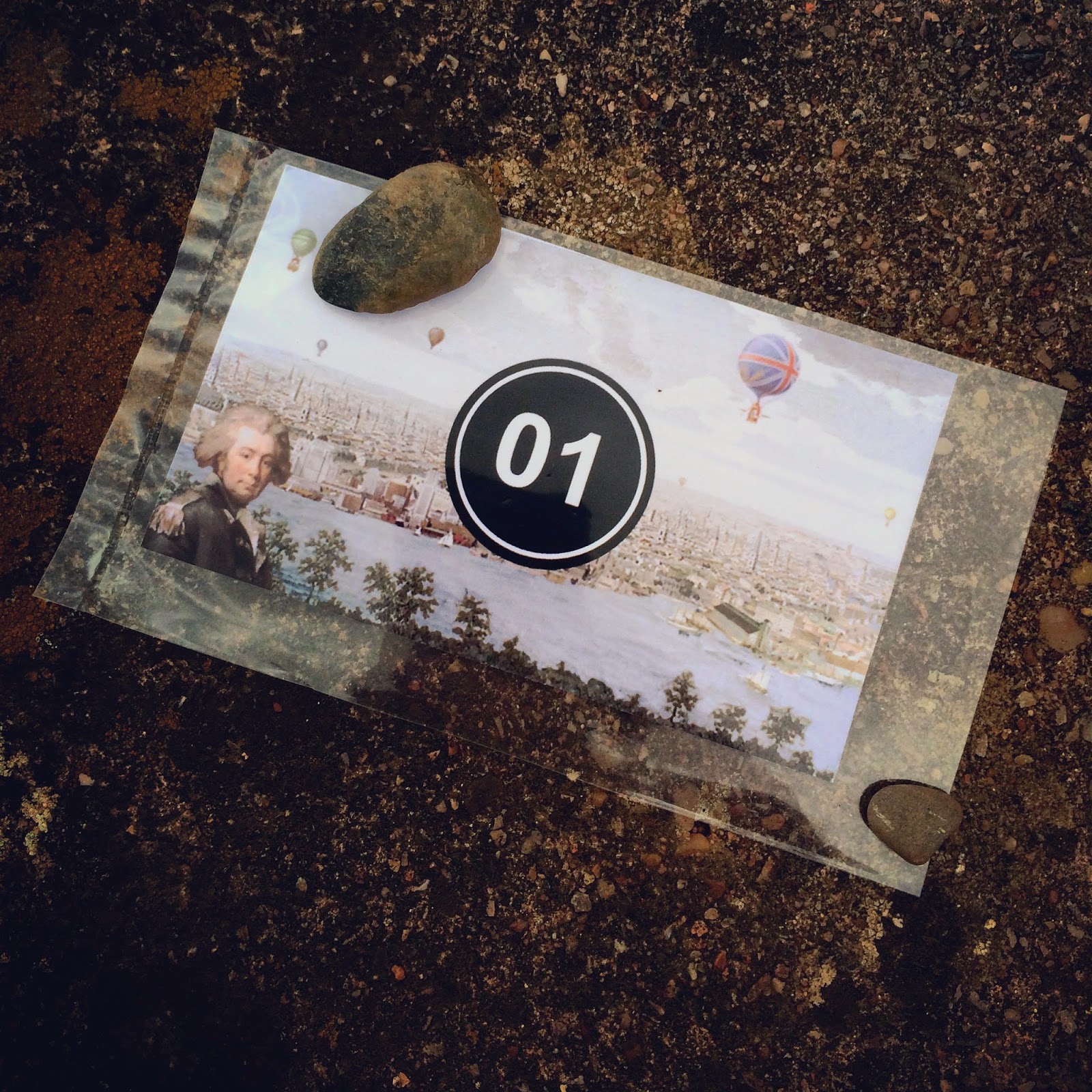
Showing posts with label 1700s. Show all posts

Monday, August 3, 2015

John Graves Simcoe, Napoleon Bonaparte & The Politics of Horse Shit

This is a photo of horse shit. But it's not just any photo of horse shit. This horse shit is on Woodbury Common — a beautiful patch of heathland in the English countryside. And with horse shit on Woodbury Common, you can tell a story about the founder of Toronto — John Graves Simcoe — and about a man who challenged him to a duel over that dung.

This was a few years after Simcoe founded Toronto. He'd come back home to England by then, returning to his country in a deeply troubled time. England was at war with France.

The French Revolution had started many years earlier; it was already well underway by the time Simcoe and his family left home for Canada. But things had gotten even bloodier while they were gone: Simcoe founded Toronto in July of 1793; the Reign of Terror began just a couple of months after that, while the Simcoes were living in a pair of fancy tents pitched at the mouth of Garrison Creek. 

And even there — six thousand kilometers from the guillotines of Paris — news of the atrocities reached them. In August, the Simcoes were visited by a pair of fleeing French aristocrats hoping to settle in Upper Canada. They told a morbid story about King Louis' botched attempt to escape his captors. By the time they shared that anecdote, the French king had already lost his head.

A few months later, Marie Antoinette followed her husband to the guillotine. News of her death took many weeks to travel across the Atlantic and up the St. Lawrence to the Canadian frontier. When it did, Simcoe marked the occasion with solemn respect. That evening, the settlers of Toronto dressed all in black, postponing the dance they had planned for the night. They might hate the French, but they were staunch monarchists — many of them had already suffered through the horrors of the American Revolution and were deeply upset by the idea of yet another bloody, democratic uprising.

It was a frightening time. The French Revolution sparked decades of war between France and the monarchies of Europe, including Britain. At the very same time that Simcoe was busy planning the first few blocks of Toronto, he was also busy worrying that the war back home would spread to North America. Even now, French revolutionaries were stirring up trouble in the United States, trying to get the Americans to join the war and invade Canada. Some had even travelled into Québec, where they hoped to convince the French Canadians to rise up and launch their own revolution. As the Simcoes slept in their tents at night, they worried that at any moment an enemy ship might sail over the horizon — or enemy soldiers burst from the woods. Simcoe's wife, Elizabeth, had nightmares about it.

John Graves Simcoe
Things only got scarier when they began to head home for England. As the Simcoes sailed out of the mouth of the St. Lawrence River, French warships were waiting. They chased them out into the Atlantic, seizing other English vessels who were sailing nearby. As the Simcoes' ship dodged icebergs off the coast of Labrador, Elizabeth and the children hid themselves in the cramped quarters below deck. They could hear guns in the distance. It took weeks to sail across the open ocean before the Simcoes finally reached the safety of home.

Even then, it wasn't over. The British would be at war with the French for most of the next twenty years. And things would only get worse. By the time the Simcoes got back to England, a new French general had begun to make a name for himself. Napoleon Bonaparte would prove to be one of the most brilliant and most power hungry dictators in history.

The wars against the French would dominate the rest of Simcoe's life. In the end, he would die fighting them.

But first, he had an important role to play. Simcoe didn't always get along with his superiors, but he did earn the respect of some of the most powerful men in England: Prime Minister Addington, Admiral Nelson, the Duke of York; he even spent time with "Mad" King George. His experience was especially respected when it came to military matters. He'd been one of the most celebrated heroes on the British side of the American Revolution. And as the first Lieutenant Governor of Upper Canada, he'd been responsible for preparing the defences of the new province in case of an American invasion. And so, just a couple of years after his return to England, Simcoe was given a new job: preparing part of England in case of a French invasion.

At times, it seemed as if that invasion could happen at any moment — especially once Napoleon was in charge. Having already expanded his empire on the Continent, the French general began to assemble an army to bring England to its knees. Two hundred thousand men were being trained on the coast of France: the Armée d'Angleterre. A whole flotilla of barges was built to carry them across the English Channel. For a while, Napoleon was even toying with the idea of deploying the world's first air force: a fleet of hot air balloons to support the attack. There were rumours of a giant tunnel being dug beneath the Channel. And of a massive raft powered by windmills. To pay for it all, Napoleon had already sold the Louisiana Territory to the Americans. He was so sure his invasion was going to succeed that he built a triumphal arch to commemorate it before it had even happened.

Meanwhile, on the other side of the Channel, Simcoe was getting ready for the invasion. The British government had put him in charge of the entire defence of the West Country. Devon, Cornwall and Somerset would be under his command. If the French landed there, Simcoe and his men would answer with a scorched earth campaign. They would evacuate all women and children, the elderly and the sick — and all the livestock, too. Everything they left behind would be destroyed. The French would find nothing to eat.

Instead, they would be met by the biggest military force Britain had ever assembled. More than six hundred thousand men were ready to fight — nearly 10% of the entire population of England. In the West Country alone, Simcoe was in command of twelve thousand men.

Woodbury Common
But they weren't all experienced soldiers. Professional troops were joined by volunteers and conscripted militia. They needed lots of training. And to do that training, Simcoe sometimes took them to Woodbury Common.

Woodbury Common is high in the gorgeous green hills of Devon. It's just a few kilometers from the Simcoes' summer home in the seaside town of Budleigh Salterton. And it's not too far from their country estate in the Blackdown Hills, either. It's a beautiful place: gently rolling hills covered with flowers, shrubs and short grass. It's typical heathland; in fact, if you look up "heath" on Wikipedia, the first photo you'll see is a photo of Woodbury Common. It's one of England's official Areas of Outstanding Natural Beauty.

At the very highest point on the Common, you'll find a patch of trees. They're growing on the remains of massive earthworks. The big ditches are what's left of the ancient Woodbury Castle: an Iron Age hill fort built in the days of the druids; it's more than two thousand years old. From the lands around the castle, you can see for miles and miles in every direction — all the way back down to the sea. It's the perfect spot for a military base. In fact, the British army still trains there to this day.

And so about two hundred years ago, you could find thousands of Simcoe's troops camping on Woodbury Common as they awaited Napoleon's arrival — and with those camping men came hundreds of horses.

That, finally, bring us to the horse shit.

With all those horses trotting around, there was, of course, plenty of dung on Woodbury Common. And the question of who was ultimately responsible for it — Simcoe's troops or the local land owner — sparked a fight that nearly ended in a duel. But not for the reason you might think.

The principal owner of the lands around Woodbury Common was a man by the name of Lord Rolle. History would eventually remember him as the man who tripped during Queen Victoria's coronation and rolled down the steps to the throne. He and Simcoe didn't get along at all. Rolle was pretty pissed off by the inconvenience caused by all the men camping on the Common. And he was even more pissed off by the fact that they were cleaning up after themselves. Simcoe was making sure that all the horse shit was being collected and taken away. Rolle was furious. He wanted that horse shit for himself. It was valuable manure.

Rolle began a letter-writing campaign. He complained to the authorities, insisting that tradition dictated that any horse shit left by the military on common land belonged to the local lord of the manor: him. Simcoe was stealing his shit. And if Simcoe got away with it, it would set a dangerous precedent: any British general would be allowed to trample the rights of any lord. The question of the horse shit on Woodbury Common, Rolle argued, was a question of importance to every single subject in the British Empire.

Simcoe, for his part, sent a flurry of his own letters arguing the opposite. And as the letters flew back and forth, the fight escalated. Before long, Rolle was ordering his men to physically stop Simcoe's troops from removing the shit from the Common. The dispute was getting so serious that it was eventually forwarded all the way to the man in charge of the entire British military: the Duke of York (the son of "Mad" King George III and the guy who Simcoe had originally named Toronto after — back when it was still known as the town of York).
 
Woodbury Castle
In the end, Simcoe lost the battle of the Woodbury Common horse shit. His orders came directly from Whitehall — the heart of the British government at Westminster. The manure belonged to Rolle. He would be compensated for the shit that had already been taken away. And he would be allowed to keep any dung produced by Simcoe's horses in the future — as long as he sold it to the public at an appropriate discount.

But Rolle still wasn't satisfied. He was so angry with Simcoe that he challenged him to a duel. He wanted, he declared, to have a fist-fight with the founder of Toronto.
 
Simcoe was not impressed. Gentlemen, he replied, didn't fight with their fists. It was unseemly. If Rolle wanted to have a duel, they could have a duel: with pistols or with swords. It didn't count if there was no chance you might die.

Rolle backed down.

And so did Napoleon. The tiny French Emperor never did invade England. Instead, he marched his army east into the heart of Europe. But it wasn't the end of Simcoe's connection to the man. There was one sad chapter left to come.

It didn't take long for the French army to invade Spain and Portugal. The Peninsular War — as it was called — would rage for years on end. It was a bloody campaign. Tens of thousands were killed or wounded. Simcoe's own son, Francis, would die during the Siege of Badajoz in Portugal. (Just a toddler when Toronto was founded, his parents had jokingly named their log cabin in his honour: Castle Frank. We still remember it today in the name of a subway station.)

By then, John Graves Simcoe was already dead. He died during that same campaign. His preparations for Napoleon's invasion had earned him a promotion: Commander-in-Chief of the entire British army in India. But just before he left for his new post, he got new orders: his services were once again desperately needed in the fight against the French. Simcoe sailed to Portugal. But the ship he sailed on was damp and newly painted. He had always suffered from terrible respiratory problems — in fact, that's why he'd been forced to come home from Canada.

Simcoe was deathly ill by the time he made it to Lisbon. He would never recover. He was loaded back onto the same sickly ship and sent home across the Channel to England. He died in Exeter just a few days later.

As for Napoleon, well, he did finally make it to Devon one day. But it wasn't at the head of an invading army. Instead, he saw those rolling green hills from the deck of a British ship as it sailed by. It was all over; he'd lost the Battle of Waterloo and was now being held prisoner. Defeated for the final time, the French general asked if he could retire in England with a small parcel of land. His request was refused. The British didn't let him off that ship; he was never to set foot in Devon. Instead, they kept sailing, taking him far away to the isolated island of Saint Helena where he would live out the rest of his days in peace and frustrating quiet.

-----

More than two hundred years after Simcoe founded our city, Toronto is still wrestling with the question of who is responsible for our horse shit. You can read more about that on the CBC News website here.


The first person to alert me to the story of Simcoe and the shit was Michael Downes at the Fairlynch Museum in Budleigh Salterton. You can find the museum at their website, on Twitter, and on Facebook.

Simcoe's biographers, Mary Beacock Fryer and Christopher Dracott, cover the story in their book, which you borrow from the Toronto Public Library here or buy here.

You can learn more about Napoleon's brief stay in Devon in Devonshire Magazine here.

Photos of Woodbury Common and Woodbury Castle by me: Adam Bunch.


This post is related to dream
01 Metropolitan York
John Graves Simcoe, 1793

This post is related to dream
30 The Conference of the Beasts
Francis Simcoe, 1796

This post is related to dream
34 The Upper Canadian Ball
Elizabeth Simcoe, 1793


Wednesday, May 27, 2015

Toronto's Founding Dog & How He Almost Got Eaten

It was the summer of 1793. The summer our city was founded. On an early Tuesday morning, as the late July sun rose above Lake Ontario, a British warship sailed into Toronto Bay. She was the HMS Mississauga. She had sailed overnight from Niagara, arriving in darkness, waiting for dawn and a local fur trader to show her the way through the treacherous shoals at the mouth of the harbour. On board was the first Lieutenant Governor of Upper Canada: John Graves Simcoe. His family was with him, too. The Simcoes had come to found a new capital for the new province: a tiny muddy town that would eventually grow into a booming metropolis of concrete and glass filled with millions of people.

The Simcoes weren't alone. They had brought their pets with them. There was a white cat with grey spots and a big friendly beast of a dog. He was a Newfoundland. His name was Jack Sharp.

Newfoundlands are a Canadian dog. By the time Jack Sharp was born, his breed had already been living on the island of Newfoundland for centuries. They've been there so long that no one is entirely sure where they came from — how they were first bred or evolved. Some people like to say they're descended from the big black bear dogs the Vikings brought with them across the Atlantic a thousand years ago. Others say their ancestors were the wild wolves of Newfoundland, or the domesticated hunting dogs of the local First Nations people. But most seem to think they were probably bred by the first European fishermen to come to Canada — sailors from the Basque Country and from Portugal who spent their summers fishing the waters off the coast of Newfoundland in the very early 1500s. However it happened, by the time the first colonists made the island their permanent home, the Newfoundland dog was solidly established as its own distinct breed.

They were perfect for life on the frontier. Big and strong and brave. Smart and loyal. They have webbed feet and a thick, waterproof coat, so they're fantastic swimmers. Just like their cousins the St. Bernards, they're famous for rescuing people. When the first European explorers headed west toward the Pacific, Newfoundlands were at their side — one travelled with the famous British-Canadian map-maker David Thompson; another with the Americans Lewis and Clark. The dogs became a familiar sight for Canadian pioneers.

The Niagara River by Elizabeth Simcoe, 1790s
Jack Sharp was one of those frontier dogs. He lived in Niagara-on-the-Lake back in the days when it was still a new settlement — so new it didn't even have a church yet; an isolated outpost at the spot where the Niagara River meets Lake Ontario. It was called Newark back then, a tiny town with a tiny population. But for a few brief years, it was the centre of political power in Upper Canada: the brand new capital of the brand new province, which had recently been created as a safe haven for Loyalist refugees in the wake of the American Revolution. 

The first Governor of the new province arrived at Niagara in the summer of 1792. It took John Graves Simcoe and his family nearly a year to make the long trip from England all the way out to the edge of the Canadian frontier. They spent two months sailing across the Atlantic, an entire winter stuck in Quebec City, and another two months travelling up the St. Lawrence and across Lake Ontario.

Back home in England, they'd enjoyed life on a sprawling country estate with a legion of servants to take care of them. At Niagara, life was much more rustic. They pitched a pair of elaborate tents on the banks of the river — the same canvas houses once used by the legendary explorer Captain Cook on his famous travels through the Pacific. The Simcoes still had plenty of help and lots of nice things, but life in Canada was much more difficult than it had been back home. The Governor's wife, Elizabeth, even suffered from a bout of malaria.

Still, the Simcoes did all they could to bring their British way of life to Upper Canada — that was, in fact, part of their mission. While the Governor busied himself running his new province, Elizabeth kept a detailed diary, painted watercolours, did needlework and entertained the most powerful Upper Canadian families. Her calendar was filled with social events: dinners, dances, balls and card games with people like the Jarvises, the Russells and Chief Justice Osgoode. Even Prince Edward, the future father of Queen Victoria, came all the way to Niagara for an official state visit. And there were visits from important First Nations allies, too, like the Mohawk leader Joseph Brant, Thayendanegea.

Elizabeth Simcoe
Elizabeth also had a family to run. The Simcoes had brought their youngest children with them to Canada: Sophia was in her terrible twos; Francis had just turned one. Even with a pair of nurses to help, the toddlers were more than a handful. And Elizabeth was pregnant yet again. That winter in the canvas house, she gave birth to a baby girl they named Katherine.

Even on the frontier, the Simcoe children would grow up with plenty of pets. Once they got to Upper Canada, the Simcoes had been given a white cat with grey spots and a hound called Trojan. Trojan was a gift for the kids, but it was Elizabeth Simcoe that he loved best. He even slept in her room inside the canvas house at night. And soon, there was another new addition to the menagerie. Jack Sharp had been the sheriff's dog. But when the Simcoes arrived, the big Newfoundland quickly fell in love with them. Before long, he had managed to adopt them as his own, joining their growing family. 

Elizabeth wrote about the animals in her diary — and about the mischief they caused. When Jack Sharp joined Governor Simcoe on a long trip to Detroit, the big dog faced off against a raccoon and then attacked a porcupine and earned a neck full of quills. When Elizabeth left Trojan alone in her tent with a map she'd painstakingly drawn, the hound tore it to pieces. (Governor Simcoe, who fancied himself something of a poet, even wrote some verses to mark the occasion: "Upon the Dog Trojan tearing the Map of N. America.")

Sadly, Trojan wouldn't live to see Toronto. He met a tragic end in the spring of 1793 — on a strangely hot day in early April. The heat was sweltering, recorded as high as 45°C. It was so hot that Trojan fell ill. When one of Simcoe's soldiers saw the symptoms, he made a terrible mistake: he thought Trojan had contracted rabies. He hadn't — if he had, he would have been scared of the water and wouldn't have waded out into the river to cool off like he did. But the soldier didn't know any better: he shot the dog dead.

So that summer, when the Simcoe family left Niagara, it was only their cat and Jack Sharp who came with them. 

They left because Niagara wasn't going to be safe anymore. Soon, the Americans would be taking over the other side of the river; it was one of the peace terms negotiated in the wake of the Revolution. The big guns of Fort Niagara were over there — just across the mouth of the river from Niagara-on-the-Lake. The tiny capital would be almost impossible to defend if the Americans decided to invade. And it seemed inevitable they would. Simcoe needed to find a new capital. Fast.

Toronto harbour by Elizabeth Simcoe, 1793
The spot he eventually picked was directly north across the lake from Niagara: a place called Toronto. There, a natural harbour had been formed by a long sandbar that would eventually become the Toronto islands. There was only one way into the bay, so it would be relatively easy to defend against an attack. That's where Simcoe would build his new capital.

In the middle of July, the Governor sent a hundred soldiers across the lake to begin work. They were the Queen's Rangers; some of them, the very same men Simcoe had commanded while fighting against the American rebels during the Revolution. At Toronto, his troops would build on land the British had "bought" from the Mississaugas years earlier (with a document so sketchy the Canadian government would eventually settle a land claim for $145 million). Simcoe's men made camp at a spot near the entrance to the harbour, at the mouth of what would become known as Garrison Creek. There, they got to work felling trees, hacking away at the ancient forest that towered over the shore. Great pines and oaks came crashing to the ground. In their place, a military base began to take shape: Fort York. It was the beginning a brand new town. Simcoe would call it York; we call it Toronto.

Back at Niagara, the Simcoes were getting ready to follow the Queen's Rangers across the lake. The Governor had just finished overseeing a session of the Upper Canadian legislature — one of the most important parliamentary sessions in Canadian history. Simcoe wanted to abolish slavery; the elected assembly balked. Slave-owning families like the Jarvises and the Russells were planning to bring their slaves with them to the new capital. Simcoe convinced them to accept a comprise: they could keep the slaves they already owned, but no new slaves could enter the province and the children of slaves would be freed when they reached the age of 25. The Act Against Slavery was the first law to abolish slavery in the history of the British Empire.

It was at the very end of that same month — on July 29th — that the Simcoes left Niagara. That night, the family and their pets climbed aboard the HMS Mississauga. She was a big warship: an armed schooner. An impressive way to travel — for a human or a dog.

As the Simcoes slept, the warship sailed north across the lake. Early the next morning, she made her careful way into Toronto Bay.

Toronto shoreline by Elizabeth Simcoe, 1796
It was the middle of the afternoon by the time the Governor and his wife went ashore for the first time. And when they did, they brought the dog with them.

Jack Sharp was far from the first canine to ever set paw on this land. Wolves and foxes roamed the woods around Toronto. And domesticated dogs had been here as long as humans had. The people of the First Nations and their ancestors had been hunting with them on the northern shore of Lake Ontario for thousands and thousands of years before our city was founded. As the Wendat-Huron historian George Sioui points out, dogs played an important role in the spiritual life of his own nation. The first racist French missionaries — anxious to paint the First Nations as "uncivilized" — claimed those dogs were only being raised for their meat. "Like sheep," they said. But in fact, dog meat was only consumed during important ritual ceremonies, and the people shared a close bond with their canine companions. The Wendat had long said that souls travel a path through the stars when they die: humans along the Milky Way and their dogs along a celestial dog path right next to them. In more recent years, as the first Europeans arrived, other dogs must have visited Toronto. Many of the explorers, fur traders and early settlers who passed through the area probably had dogs with them, too.
 
So Jack Sharp wasn't Toronto's first dog. Not by a long shot. But he was our city's founding dog: the canine member of the first family to establish the town that would grow into our modern metropolis.

A few days after they arrived, the Simcoes pitched their canvas houses just across the creek from Fort York, where they could watch as the Queen's Rangers hammered and sawed away. That's when they brought the children ashore, along with the nurses and servants. By the end of the first week of August, the entire family, including Jack Sharp, was living in the fancy tents at the mouth of Garrison Creek. In the months to come, the town itself would begin to take shape: the first ten blocks were carved out of the woods where the St. Lawrence Market neighbourhoood is now. From George Street over to Berkeley; from Front Street up to Adelaide.

It's easy to imagine what life in Toronto must have been like for Jack Sharp. Splashing in the shallows of the harbour as waterfowl scattered into the sky. Playing with the Simcoe children on the beach. Racing through the old forest, chasing chipmunks, rabbits and squirrels.

Toronto 1793 (with HMS Mississauga) by Elizabeth Simcoe
But for the humans, life on shore at Toronto was even harder than life at Niagara had been. There, at least, the settlers enjoyed an established town. Here, the town was still being built. Many of the province's other most powerful families were shocked by the Simcoes' living conditions. As Peter Russell wrote to his sister, "you have no conception of the Misery in which they live..." The other leading political families dragged their feet, staying at Niagara as long as they could before following the Simcoes across the lake.

The First Family of Upper Canada suffered through an entire winter at Toronto. But the most terrible moment of the Simcoes' time in Canada came the following spring. Katherine Simcoe had been a very healthy baby; she was more than a year old now, beginning to walk and to talk, old enough to start playing with the cat and Jack Sharp. But in April she suddenly fell very ill. It may have been malaria or some other similar disease. A fever turned into a terrifying night of uncontrollable spasms. By morning, she was gone. She was buried in a new cemetery near the fort; today, it's a park we call Victoria Memorial Square, just a bit south-east of Bathurst & King.

For the Simcoes, death was never far away. The previous fall, Jack Sharp had had his own brush with mortality. And Governor Simcoe, too.

It came during a long trip north. Simcoe wanted to find the best route from Toronto all the way up to Lake Huron. Easy movement through the province would be vital in case of an American invasion. And that was seeming ever-more imminent: the British were now at war with France, the Americans' allies, caught up in the violence that engulfed Europe in the wake the French Revolution. Simcoe was worried the trouble would spread across the Atlantic — which it soon would with the War of 1812. The Simcoes' peaceful life at Toronto felt precarious. Enemy ships might sail over the horizon at any moment; enemy troops might emerge from the woods. As she slept in her canvas house at night, Elizabeth had nightmares about it. In fact, when the Simcoes finally sailed home to England, French warships would be waiting to chase them out of the mouth of the St. Lawrence. Both John Graves Simcoe and his son Francis would eventually die in the fight against Napoleon.

So that September, Simcoe and his men headed north with the help of Ojibway guides. Jack Sharp went with them, too. They travelled up a portage route called the Toronto Carrying-Place. The big dog made for something of an awkward passenger in a canoe, but they made quick progress up the Humber River, through the marshlands far to the north of Toronto, and then along the Holland River to a lake the French called Lac aux Claies.

John Graves Simcoe
When they arrived, Simcoe renamed the lake, like he was renaming just about everything he found in Upper Canada. He called it "Lake Simcoe" — not after himself, but after his father, who had died in Canada during the last war against the French, just a few months before the Battle of the Plains of Abraham.

There, Simcoe found his route north. It wouldn't be hard to get from Lake Simcoe to Lake Huron — and to make things even easier, he would have a road built north from Toronto toward the Holland River. He named the road after a friend, the British Secretary at War: Sir George Yonge.

But getting home now — with Yonge Street still just a dream — would prove to be an unexpectedly perilous challenge.

As Simcoe, his men, his dog and the Ojibway guides all headed back south toward Toronto, their luck began to turn against them. One man had nearly severed a toe and couldn't walk anymore; others would fall ill. The party was forced to split up. The group Simcoe was with only had enough food for one day, but had a five-day journey ahead of them. From there, things quickly got worse. They were taking a different route home than the one they'd taken north: this time, they were heading along the eastern fork of the Toronto Carrying-Place portage route, which headed south down the Rouge River. They got lost along the way, stumbling through the woods for days on end, never quite sure where they were. Meanwhile, their rations were growing dangerous low. If they didn't find home soon, they would starve.

Things were getting desperate. So a plan took shape. If they didn't find Toronto that day, they would have no choice. They would kill Jack Sharp. And then eat him.

The Newfoundland was spared just in the nick of time. First, the men came across a surveyor's line. It was a good sign. And then, through the trees they spotted it: Lake Ontario. They finally knew where they were: just a few kilometers from the tiny new Upper Canadian capital. They were ecstatic. That morning, they wolfed down the rest of their food for breakfast and then finally headed west toward home.

The founder of Toronto was saved. And so was Toronto's founding dog. 

-----

That painting at the top of this post isn't Jack Sharp, but another famous Newfoundland dog called Bob. The painting is called "A Distinguished Member of the Humane Society" by Sir Edwin Henry Landseer, painted in 1831. Bob was found in a shipwreck off the coast of England and would go on to save twenty-three people from drowning in the Thames over the course of fourteen years.

You can read my post about the Simcoe's cat hereabout Elizabeth Simcoe's nightmare here, and about John Graves Simcoe's vision for Toronto (a city so awesome it would undo the American Revolution) here.

You can read Elizabeth Simcoe's diary online here. You can borrow it from the Toronto Public Library here. Or buy it from Amazon here.

You can read excerpts from Elizabeth Simcoe biography, by Mary Beacock Fryer, on Google Books here, buy it here, or borrow it here from the Toronto Public Library. Her biography of John Graves Simcoe written with Christopher Dracott is here and here. While her biography of Francis Simcoe is here and here.

You can read Bathsheba Susannah Wesley's fascinating Master's thesis about her habit of setting small fires during her time in Canada here [PDF]. The always excellent Dictionary of Canadian Biography has a full bio for Elizabeth Simcoe here. And John Graves Simcoe here. You can learn more about the soldiers who built Toronto, the Queen's Rangers, here. And learn more about the Simcoe's canvas houses here.

Learn more about the historian George Sioui from the Tyee here. The New York Times has a history of dogs in the early Americas here. Cheryl MacDonald writes about Jack Sharp and other famous Newfoundlands in her book "Celebrated Pets" on Google Books here. Jack Sharp also gets mentions in a footnote to Richard D. Merritt's "On Common Ground: The Ongoing Story of the Commons in Niagara-on-the-Lake" on Google Books here.

Elizabeth Simcoe's painting of the Toronto harbour comes from the Toronto Public Library's Digital Archives here.  Her painting of the Toronto shoreline comes via Heritage Toronto here. Her painting of the Niagara River comes from the Wikimedia Commons here


This post is related to dream
01 Metropolitan York
John Graves Simcoe, 1793

This post is related to dream
30 The Conference of the Beasts
Francis Simcoe, 1796

This post is related to dream
34 The Upper Canadian Ball
Elizabeth Simcoe, 1793


Monday, July 14, 2014

Death & The Simcoe Boys

UK TOUR DAY NINE (EXETER): Death was no stranger to the Simcoe boys. In fact, it started to claim people close to them before they were even born. Both of their older brothers died as babies. The eldest was buried just a few weeks after he was baptized. The second was born and died the following year. Sadly, that wasn't unusual. This was the mid-1700s, when infant mortality was still a familiar tragedy in England. Luckily, the next two Simcoe kids — the future founder of Toronto, John Graves Simcoe, and his younger brother Percy — survived their first few dangerous months. But then it was their father's turn.

They were just toddlers when war broke out. The Seven Years' War would prove be one of the bloodiest conflicts in human history — the first truly global war. The major powers of Europe clashed across their own continent and in their colonies all over the world. The boys' dad — John Simcoe — was the Captain of a ship in the Royal Navy. So when the war started, he was sent across the Atlantic, to Canada, to fight the French. He served under the legendary General James Wolfe — but a few months before Wolfe launched his famous surprise attack on Québec City at the Plains of Abraham, Captain Simcoe came down with pneumonia. He died near the mouth of the St. Lawrence River and was buried at sea.

So now, the young Simcoe boys were being raised by a single mother: Katherine Simcoe. Up to that point, they'd been in the countryside, but after the death of their father, their mum moved them to the same city where she'd grown up: to Exeter, one of the most historic cities in all of England, originally founded by the Romans sometime around the year 50. It's nearly two thousand years old.

And on Day Nine, that's where The Toronto Dreams Project's UK Tour took me: to explore the hometown of the man who founded our city — to follow in the footsteps of his family, to leave dreams for them there, and to visit the spot where his story ended. Because it's in Exeter that all three of those surviving Simcoes eventually died.

Young Percy was the first to go. On a June day in the summer of 1764, he and some friends were playing in the River Exe. It flows through Exeter on its way south to the Bristol Channel — and that stretch can be very a dangerous place sometimes. On that particular day, something must have gone horibly wrong: the river got the better of the young boy, who was still just 10 years old. They tried to save him, rushed him to shore and rubbed his body with salt. But that didn't work, of course. Just a few years later, that "cure" for drowning was discredited as a superstition.

The River Exe, near where Percy Simcoe drowned
They say John Graves Simcoe might have been there to see his little brother die. His biographers write that it's "quite likely" he was playing in the river that day, too. And now, suddenly, he was an only child. It was just him and his mum left.

She was the next to die. But first, she seems to have done all she could for her only remaining son. When he graduated from the local Exeter Grammar School, she paid to send him to one of the most prestigious boarding schools in the entire world: Eton College. It's just a few hundred meters from Windsor Castle; nineteen British Prime Ministers have gone there. (I'm planning on heading there in a few days, too.) After that, Simcoe was off to Oxford University, and then to join the army. And since this was back in the days when most people had to buy their way into being an officer, his mum paid for that too.

Soon, Simcoe was making a name for himself by following in his father's footsteps: fighting in a North American war. This time, it was the American Revolution. And as commander of the Queen's Rangers, Simcoe was quickly becoming one of the rising of the Briitsh army.

So that's where he was when his mother died. It was during the first year of the war. Her death was long and painful. A friend wrote to Simcoe when it was all over: "Your poor mother's death was truly a release her last disorders were so exceedingly painful that no friend could wish her continuance." She passed away at her home on the Cathedral Close — a row of buildings standing across the lawn from Exeter Cathedral. Her only child was thousands of kilometers away when it happened. But exactly 30 years later, John Graves Simcoe would die in one of those very same buildings.

By then, of course, he had earned a place in Canadian history by founding Toronto. And he'd seen plenty more death. He killed men during the Revolution. And watched his own men die, too. Then, his little daughter Katherine (named after his mother) died in Toronto when she and our city were only about a year old. He named his next child after his father; he died, too, when they tried an early, rudimentary, and incredibly risky inoculation against smallpox.

In the end, John Graves Simcoe died in much the same way his father did. He had just been awarded one of the most prestigious jobs in the entire British Empire — Commander-in-Chief in India — but before he could leave, he was needed in the fight against Napoleon. On the journey to Portugal, Simcoe fell seriously ill; it seems the fresh lead paint job on his ship aggravated his weak lungs, sparking a severe bout of what he called "asthmatic paroxysms." He was rushed back to England, but on board that very same poisonous ship. He would never recover. They took him to Exeter. To the house of his friend, the Archdeadon, who lived in one of those buildings across from the Cathedral. John Graves Simcoe had travelled thousands upon thousands of kilometers in his life, but it was there — only a few meters from where his mother had died, and a few hundred meters from the spot where his brother had drowned — that the man who founded Toronto finally drew his last breath.

The story of the death of John Graves Simcoe will appear in The Toronto Book of the Dead, coming from Dundurn Press in the fall of 2017.

The Cathedral Close, where Simcoe died
Ontario Heritage plaque on the Cathedral Close
A dream for Simcoe on the Cathedral Close
Exeter Cathedral
Knights died for the Cathedral tourists
Exeter Cathedral
Dreams for Simcoe & his son at their Cathedral memorial
A First Nations figure on Simcoe's Cathedral memorial
Detail of Simcoe from his Cathedral memorial
Exeter Cathedral
Badass pulpit
Exeter does death up right
Marking the old entrance to Exeter Grammar School
A dream for Simcoe at the Blue Boy statue
A dream near the spot where Percy Simcoe drowned

-----


A version of this story will appear in
The Toronto Book of the Dead
Coming September 2017

Pre-order from Amazon, Indigo, or your favourite bookseller
Read more posts about The Toronto Dreams Project's UK Tour and the connections between the history of Toronto and the United Kingdom here. I'll be posting lots more during the trip! And you can follow me on Instagram, Twitter and Facebook too.


This post is related to dream
01 Metropolitan York
John Graves Simcoe, 1793

Friday, July 4, 2014

The Guy Toronto Was Originally Named After (And His Super-Big Sex Scandal)

UK TOUR DAY ONE (LONDON): So! Today, I landed in London and launched The Toronto Dreams Project's UK Tour — spending the next two weeks leaving dreams at Toronto-related historical spots in England & Wales. And on my very first night in the United Kingdom — as well as dropping some dreams for Sydney Newman, Sir John A., Charles Seymour Wright and John Henry Lefroy — I headed to see this giant-ass column. I found it in the drizzle just as night was falling, towering above the city in one of the most prominent spots in all of London. It's at the top of some stairs just down the street from Buckingham Palace, about a block from Trafalgar Square, a couple of blocks from Downing Street and the Houses of Parliament. And it's, like, really big. More than 40 meters tall. That's about 12 storeys. The statue on top weighs more than 16,000 pounds. Inside, there's even a staircase leading to an observation deck — although they closed it to the public more than 100 years ago. It's all in honour of the Duke of York — the very same guy who Toronto was originally named after, and whose name is still plastered all over our city: from York to North York to East York to Fort York to York Street to York University to York Mills to the York Club to Royal York Road.

So. Who the hell was he?

His real name was Frederick. Prince Frederick. He was born just around the corner from where his column stands today, at St. James's Palace. (I stumbled across it last night, too.) His dad was King George III, who you probably know because he was the king who went "mad" and had a movie made about him. He was in charge back in the late 1700s and early 1800s: reigning over the battle at the Plains of Abraham, the American Revolution, the wars with Napoleon, and the War of 1812.

So, it's probably not surprising that the young Duke of York grew up in the army. And by the time he was 26, he was already a General, fighting on the edge of France against Robespierre's revolutionaries. They'd beheaded their own king a few months earlier and were at war with pretty much all the other monarchies in Europe — England included. Now those monarchies were invading France in an attempt to end the French Revolution once and for all. In early 1793, the invasion was going pretty well. And that's when the Duke of York led his troops in a victory over the French in the Battle of Famars. Before long, some people in France were hailing him as a liberator, declaring him to be their true King.

This, of course, was in days before Twitter and CNN — or even steamships and telegraphs. So word of the Duke's victory took a lonnnnnng time to cross the Atlantic and head up the St. Lawrence to reach the brand new frontier province of Upper Canada. It took three whole months. But by the end of August an official British government report was finally delivered to John Graves Simcoe, the Lieutenant Governor. At that point, he was living with his family in an elaborate tent pitched on the the northern shore of Lake Ontario. This was the place where, just a few weeks earlier, he had started to build a new capital for his new province. And he was still looking for a name.

This place did already have a name: Toronto. It was derived from a Mohawk word, which meant "where there are trees standing in the water." It originally referred to a fishing spot on the northern end of Lake Simcoe, but it was eventually used as a name for the portage route between Lake Simcoe and Lake Ontario, and then, finally, to the spot on Lake Ontario where the portage route started. That's where Simcoe was building his town. 

But Simcoe didn't like the word Toronto. He thought First Nations words were weird and ugly and "uncivilized". Everywhere he went, he was renaming things in honour of the British Empire instead. And he was pretty flipping excited about the Duke of York's latest victory.

So Simcoe announced that he was naming his new town in honour of the Prince. It would now be known as York. To commemorate the occasion, he ordered a Royal salute: all the canons on the shore, all the guns on all the ships in the harbour, all the muskets of Simcoe's soldiers were fired in honour of a man waging a war against French democrats more than 6,000 kilometers away. 

That honour might have been a little premature. The invasion of France sputtered, fell apart, and suddenly the French were sweeping across Europe taking over countries. The Duke of York's next campaign — as the head of the entire British army now — didn't go very well, either. In fact, it seems that even children started mocking him with his very own nursery rhyme: "The Grand Old Duke of York". Before long, the French had a new general — Napoleon — and it looked like even England might be in danger of invasion.

And that was only the beginning of the troubles for the Duke. In the early 1800s, right in the middle of leading the war against Napoleon, he was caught up in a big political sex scandal. The Duke's former mistress claimed that while they'd been together, she was taking bribes in return for convincing him to give people commissions in the army. It was a particularly cutting attack, because his lasting legacy was making reforms to get rid of that kind of thing. His defence wasn't exactly reassuring: he said he was innocent of corruption because he didn't understand what was happening. More than 200 years later, The Independent still calls it "the greatest scandal in the history of the British Parliament."

The House of Commons eventually voted to acquit him, but enough people were questioning his leadership that he was forced to resign in disgrace anyway. A few years later, he was completely cleared of the charges: the mistress published a book revealing that the whole thing had been a conspiracy to discredit the Duke. She said she'd been paid thousands of pounds to make false claims against him. She fled to France and the Duke of York was reinstated as the head of the army. So he was the guy in charge of all the British forces during the years of the War of 1812 and when the Duke of Wellington finally beat Napoleon for good at the Battle of Waterloo.

When the Duke of York died, every single soldier in the British army gave up one day of wages to raise enough money to build a column in his honour. And that's the one that stands in the heart of London to this day.

By then, though, the bloom was most certainly off the rose. And a few years after the death of the Duke, our little town of York in Upper Canada was going to officially become a city. We chose, as our first Mayor, a man who was no great fan of the way the British were treating Canada; William Lyon Mackenzie took much more inspiration from revolutionaries than from monarchists. City Council debated whether to keep the name Simcoe gave us, or to embrace the name this place had when he first arrived. Some argued in favour of keeping "York", but in the end the majority agreed:

Toronto was more beautiful, more distinctive, more Canadian.

-----

Read more posts about The Toronto Dreams Project's UK Tour and the connections between the history of Toronto and the United Kingdom here. I'll be posting lots more during the trip! And you can follow me on Instagram, Twitter and Facebook too.

There is, however, one provincial capital in Canada still named in honour of the Duke: Fredericton. You can watch some crazy old British Pathé footage of the Duke of York Column being cleaned in 1961 here. The Independent tells the story of the sex scandal here. And Natural Resources Canada has "The real story of how Toronto got its name" here.

Wednesday, April 9, 2014

UK Tour Preview: The Ancient Church Where The Simcoes Got Hitched

This is the Church of St. Mary & St. Giles. It's in the middle of the English countryside. To get there, you have to take the train west from London for about three hours — all the way across the country, out into the rolling hills of Devon. Then you start walking, west some more, along dirt lanes that curve through the green of farmers' fields. An hour later, you'll be in the small village of Buckerell. That's where you'll find this little church, which has been standing on this spot so long that no one is entirely sure when it was built. Probably in the early 1300s. That's back in the days of the Crusades, not long after Robin Hood, so long ago that medieval jousting was still a new fad. At that same time, faaaaaar to the west across the Atlantic, the area around Toronto was home to vast forests and cornfields and to the villages of the First Nations. It would be a few more centuries before the first European made the long trip across the ocean and up the St. Lawrence to the north shore of Lake Ontario. And another two centuries after that before Toronto was founded.

The man who founded it — John Graves Simcoe — used to live in the hills around this church. That was back in the 1700s. In fact, if you visit the church today, you'll find a memorial to Simcoe's godfather inside. His name was Admiral Graves; he was the fellow in charge of the British navy in North America during the earliest stages of the American Revolution. His godson would end up being a hero of that war — as the commander of the Queen's Rangers, John Graves Simcoe brought new, guerrilla-style techniques to the British army, like insisting that his men be allowed to wear forest green coats instead of the usual bright red.

After the Revolution, Simcoe stayed with his godfather for a while — Hembury Fort House was just a couple of kilometers up the road from this church. That's where Simcoe first met the niece of Admiral Graves. Her name was Elizabeth Posthuma Gwillim. Her father had been a soldier, too. He fought with General Wolfe on the Plains of Abraham and died just a few months before Elizabeth was born: during a war with France sparked by the French Revolution. Her mother died, too, in childbirth, so Elizabeth split her time with relatives while she was growing up. Sometimes, she stayed at her parents' old house near the Welsh border; sometime she stayed with her uncle at Hembury Fort House. So that's where she was when she first met Simcoe, and where they fell in love, taking long walks through the countryside. They were married here, at this very church, in 1782. They bought a nearby estate. And a few years later, when Simcoe was named the first Lieutenant Governor of Upper Canada, they boarded a ship to Canada on their way to found Toronto.

The Church of St. Mary & St. Giles is one of the places I'll be visiting on the Toronto Dreams Project's UK Tour. I'll leave copies of my dreams for the Simcoes there, along with other nearby Simcoe- and Toronto-related historical sites. I'll also be writing a few posts about the connections between our city and those few green kilometers in the middle of the English countryside. But I need your help to make it happen. You can support my Indiegogo crowd-funding campaign here. And you can read more posts previewing some of the spots I'll visit on the tour here.

Wednesday, September 15, 2010

Painting: Toronto When It Was Ten Days Old

Toronto Harbour, 1793
When John Graves Simcoe (the Lieutenant Governor who founded Toronto) sailed into our harbour in 1793, he brought his family with him. And it's a good thing he did: his wife, Elizabeth, kept track of her experiences by writing a diary and painting watercolours, both of which you come across over and over and over again whenever you start looking into the first few years of Toronto's history.

Here, because I think it's neat, is one of those paintings. According to the book I'm reading at the moment, it shows the shoreline just ten days after Simcoe's men had started construction on Toronto's very first buildings: the military installations at Fort York. You can see their camp and the beginnings of the fort right there near the middle of the painting, all white and tiny and at the water's edge. Back then, Fort York was at the spot where Garrison Creek met the lake, surrounded by the lush, ancient forest which had stood there for about 7,000 years. Now, of course, the creek has been buried and a lot of the lake has been filled in with land, so these days you'll find those same buildings on the west side of Bathurst between Front and Lakeshore Drive, surrounded by the constant roar of the railway tracks and the Gardiner Expressway.

In the painting you can also see the masts of the ships that had brought the men there, but I don't really have anything interesting to say about them at the moment.